EBOO therapy, short for extracorporeal blood oxygenation and ozonation, circulates blood through a filter and an ozone exchange outside the body before returning it. A session runs 45 to 60 minutes. The treatment is offered as a wellness therapy and is not an FDA-approved treatment for any disease.
How Does an EBOO Session Work?
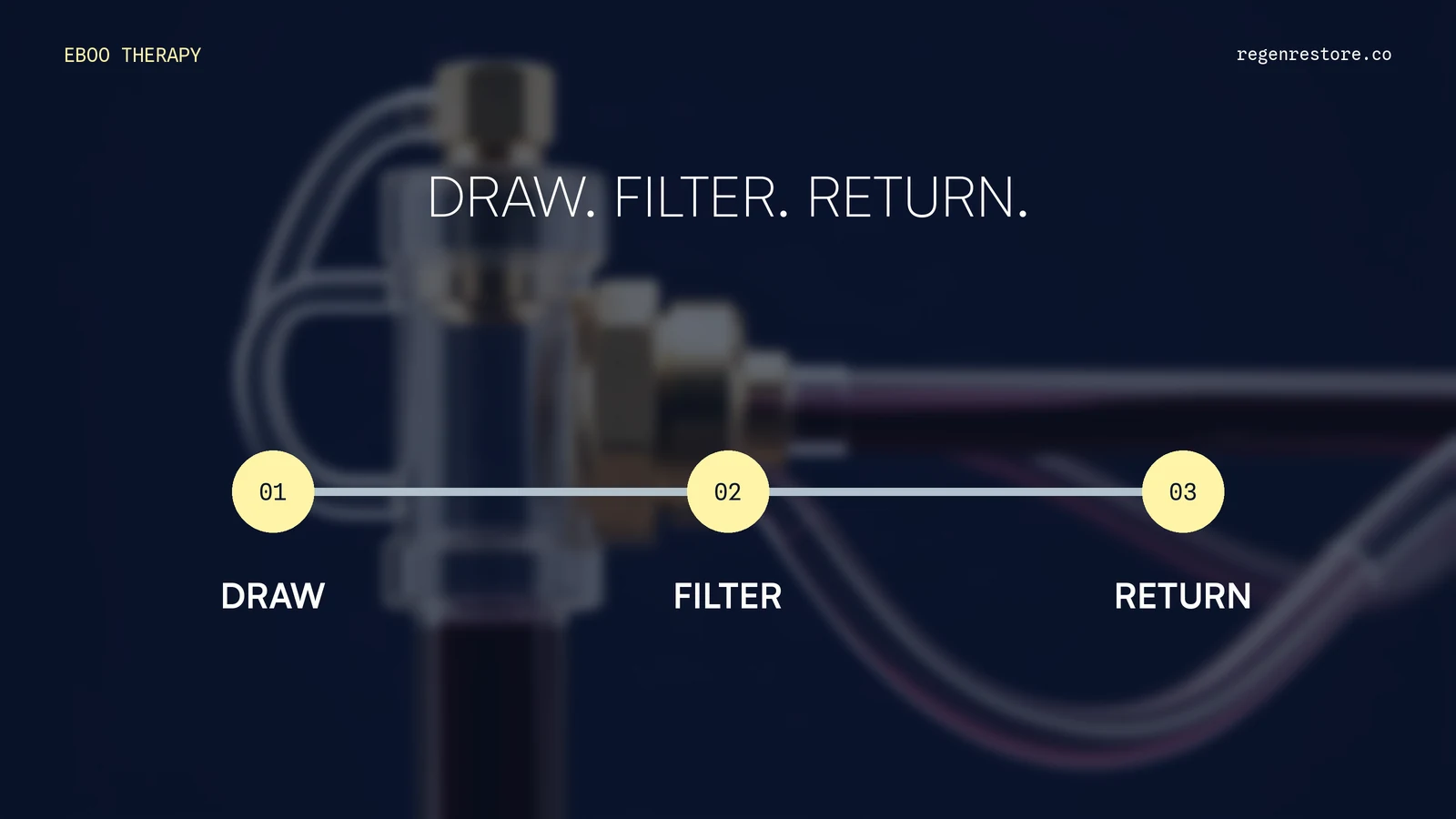
Blood exits through one arm, passes through a closed circuit, and returns through the other arm. The process follows 5 steps.
- Two IV lines are placed, one for draw and one for return.
- Blood is routed through a dialysis-style filter.
- Medical-grade oxygen and ozone are introduced through a gas exchange membrane.
- Filtered, oxygenated blood returns to circulation continuously.
- Vitals are monitored throughout the session.
Blood never leaves the sterile single-use circuit, and the volume outside the body at any moment is small.
How Is EBOO Different From Standard Ozone Therapy?
EBOO treats a continuous circulating volume, while major autohemotherapy treats a single drawn volume of 200 to 250 milliliters and returns it. Three differences follow from that.
- Volume: EBOO processes several liters across a session.
- Filtration: EBOO adds a filter stage that standard ozone therapy does not include.
- Duration: EBOO sessions run 45 to 60 minutes rather than 20 to 30.
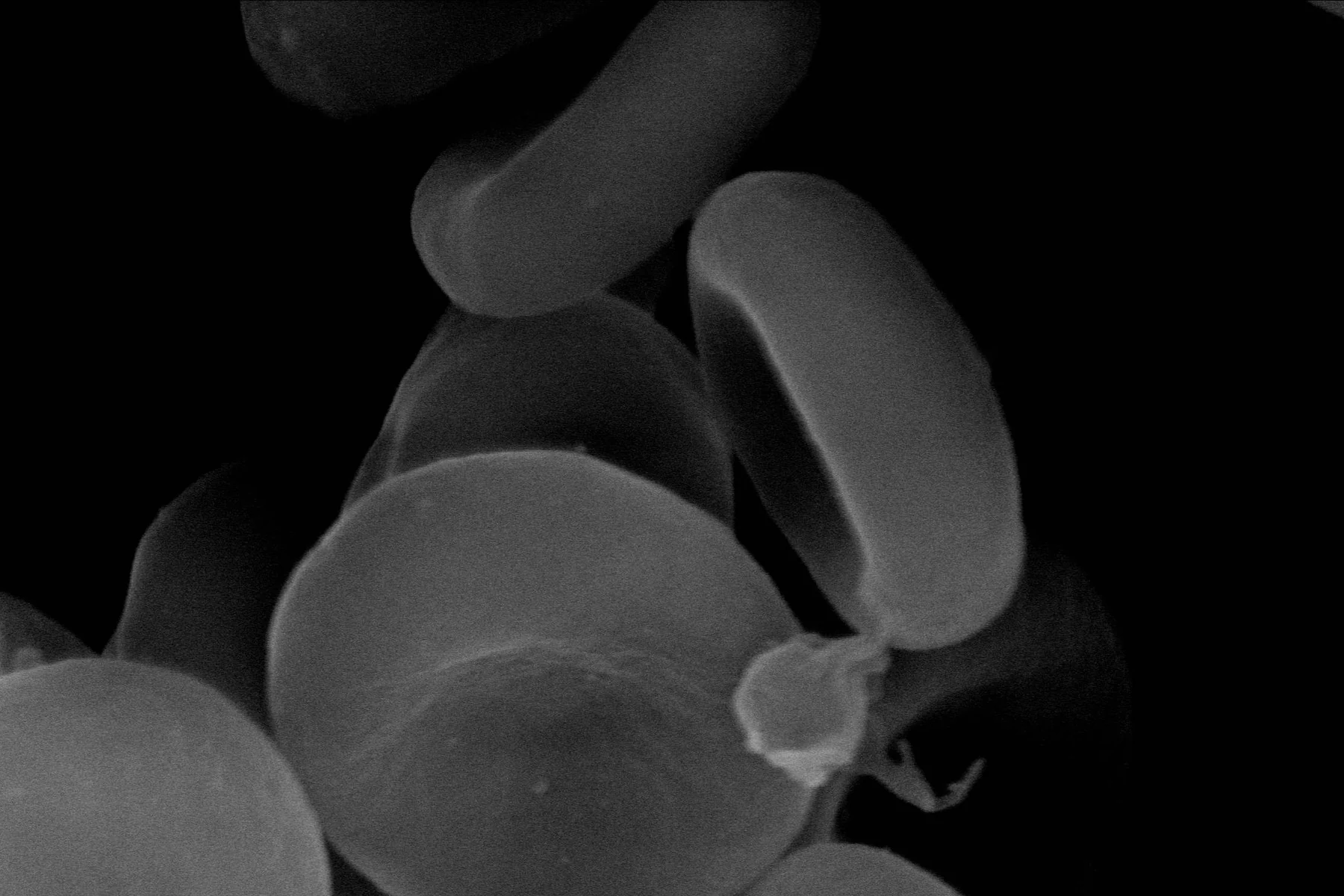
Background on the underlying modality is covered in what is ozone therapy, including how ozone interacts with red blood cells.
Who Is EBOO Therapy Not Appropriate For?
Screening rules out several groups before any session is scheduled. Contraindications include G6PD deficiency, pregnancy, active bleeding disorders, uncontrolled hyperthyroidism, recent heart attack, and current use of certain anticoagulants.
What Screening Happens First?
Patients complete a medical history, medication review, and lab work that includes a complete blood count and G6PD testing. G6PD deficiency is the single most important exclusion, since ozone exposure carries hemolysis risk in that population.
What Does the Evidence Currently Show?
Published research on EBOO is limited to small studies and case series, and large randomized trials have not been conducted. Patients most often report changes in energy and recovery rather than measurable disease outcomes. Honest framing matters here, and any clinic promising treatment of a specific disease is overstating what the evidence supports.
How Should Patients Prepare for a Session?
Preparation improves both comfort and vein access. Five steps are standard.
- Drink 32 to 64 ounces of water in the 24 hours before the appointment.
- Eat a normal meal within 2 hours of the session.
- Avoid alcohol for 24 hours beforehand.
- Bring a current medication and supplement list to the screening review.
- Plan for a light schedule for the remainder of the day.
Patients taking anticoagulants or supplements that affect clotting should disclose them during screening rather than the day of treatment.
What Do Patients Experience During and After?
Most patients sit comfortably during the session and read or work. Four experiences are commonly reported afterward.
- Mild fatigue for 12 to 24 hours.
- Bruising at either IV site.
- Increased thirst on the day of treatment.
- A subjective lift in energy over the following days.
Hydration before and after the session reduces the most common complaints. Patients pursuing broader detoxification support can review the detox pathway, and those managing persistent inflammatory symptoms can start with chronic inflammation.
Sessions are scheduled through our EBOO therapy program, which includes the required screening labs.
Frequently Asked Questions
How many EBOO sessions are typical?
Protocols commonly run 1 to 3 sessions spaced 1 to 2 weeks apart, followed by reassessment. Frequency is set during consultation based on screening results and response.
Is EBOO therapy FDA approved?
No. Ozone is not approved by the FDA as a medical treatment in the United States. EBOO is offered as an elective wellness service, and patients should understand that status before scheduling.
Does EBOO therapy hurt?
The discomfort is comparable to a standard IV placement. Two lines are used instead of one, and most patients report the placement as the only uncomfortable part of the session.