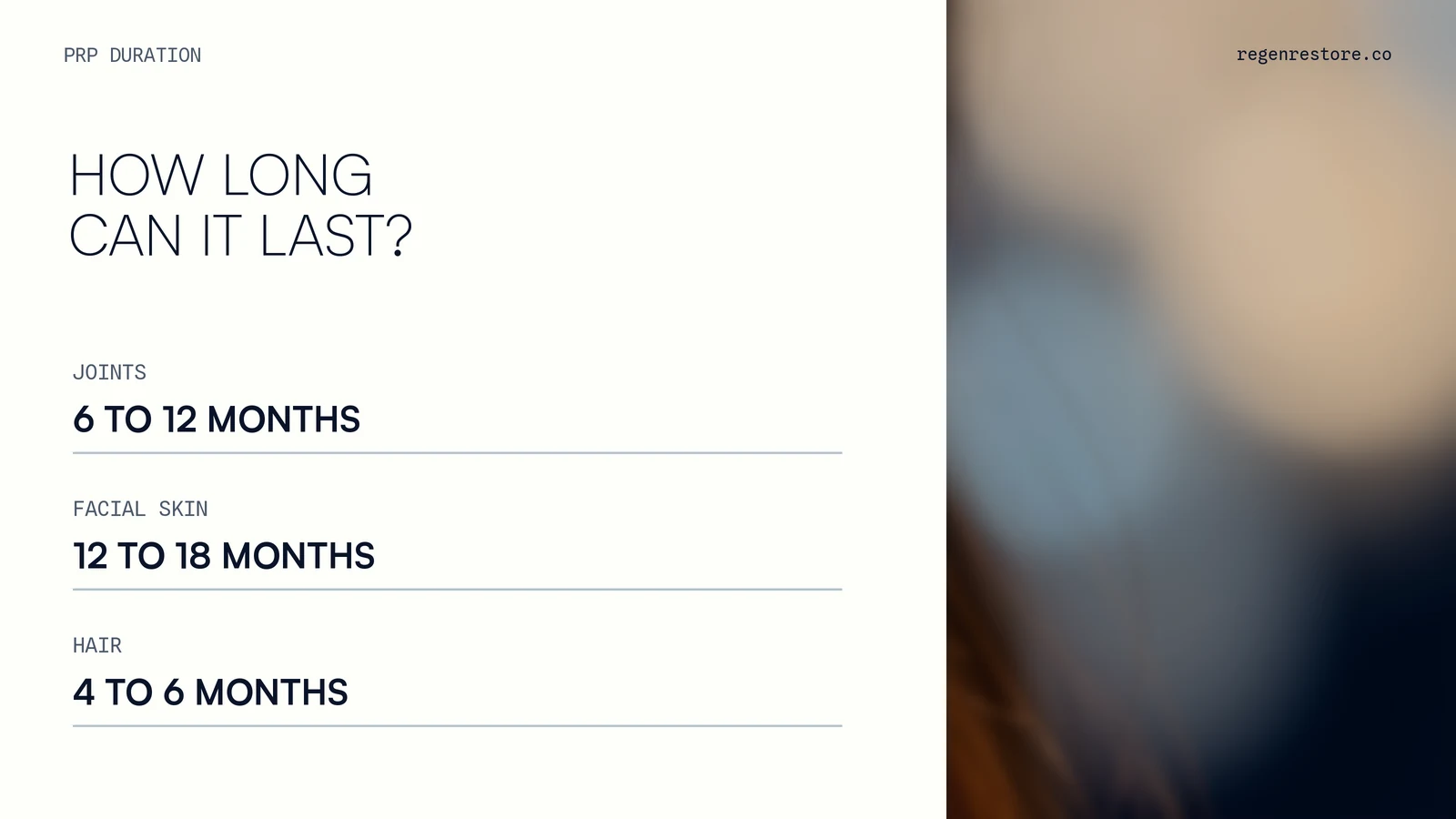
PRP results last 6 to 12 months for joint injections, 12 to 18 months for skin treatments, and require ongoing maintenance for hair restoration. The platelets themselves clear within days. What lasts is the tissue change the growth factors set in motion, and that is what maintenance protects.
How Long Do Results Last by Treatment Area?
Duration varies by tissue type and how much load the area carries.
- Knee and joint injections: 6 to 12 months, with maintenance annually.
- Tendon injuries: often durable once healing completes, since the tissue is repaired rather than cushioned.
- Facial skin treatments: 12 to 18 months with annual maintenance.
- Hair restoration: 4 to 6 months between sessions, then maintenance every 4 to 6 months.
Tendon work behaves differently from joint work. A repaired tendon can stay repaired, while an arthritic joint continues degenerating underneath any treatment.
Why Do the Platelets Clear but the Effect Remain?
Platelets release their growth factors within hours to days and are cleared quickly. Those factors trigger a cascade of collagen production, cell proliferation, and matrix remodeling that continues for weeks after the platelets are gone.
The result is a lag in both directions. Benefit appears weeks after injection, and it fades gradually rather than stopping on a date.
What Are the 6 Factors That Change Duration?
Six variables determine whether results sit at the short or long end of the range.
- Severity of the underlying condition, since advanced arthritis progresses regardless.
- Age, which affects both platelet activity and healing capacity.
- Number of sessions completed in the initial series.
- Activity and load on the treated area.
- Metabolic health, including smoking status and blood sugar control.
- PRP preparation, since platelet concentration varies by protocol.
Smoking is the single most modifiable factor on the list and affects every tissue type.
When Should Maintenance Be Scheduled?
Maintenance is scheduled before symptoms fully return rather than after. Waiting for a complete relapse means rebuilding from baseline instead of topping up an existing improvement.
Practical intervals by area: annually for joints, annually for facial treatments, and every 4 to 6 months for hair. Those intervals get adjusted based on what each patient actually reports.
Joint-specific treatment options are outlined on our joint injection page, and broader symptom management is covered under joint pain.
How Many Sessions Does the Initial Series Require?
Most protocols use 1 to 3 sessions for joints, 3 sessions for facial skin, and 3 to 4 sessions for hair restoration, spaced 4 to 6 weeks apart. Completing the full series matters more for duration than any single injection does.
Patients who stop after one session frequently report shorter-lived results, which reflects an incomplete series rather than a failed treatment. Hair-specific timelines are covered in does PRP work for hair loss.
What Can Patients Do to Extend Results?
Four habits meaningfully extend duration, and none of them require another appointment.
- Stop smoking, which impairs healing across every tissue type treated.
- Manage load on the treated joint, avoiding both inactivity and overload.
- Maintain strength in the muscles supporting the joint.
- Keep blood sugar and weight in a healthy range, since both affect inflammation.
Strength work around a treated knee does more for durability than any supplement marketed for joint health.
Frequently Asked Questions
How soon do PRP results appear?
Joint injections typically show change at 4 to 6 weeks, with continued improvement through month 3. Skin treatments brighten within 1 week, and collagen remodeling continues for 3 to 6 months.
Does PRP work permanently for tendon injuries?
Tendon repair can be lasting once healing completes, since the tissue itself is restored. Reinjury remains possible, and load management during recovery affects the outcome substantially.
Can PRP be repeated indefinitely?
Yes. PRP uses your own blood, so repeat treatment carries no cumulative material risk. Frequency is set by clinical response rather than by a lifetime cap.
Why do some patients see no result at all?
A portion of patients do not respond, most often because of advanced structural degeneration, low platelet activity, or an incomplete series. Response is assessed at 3 months rather than assumed.