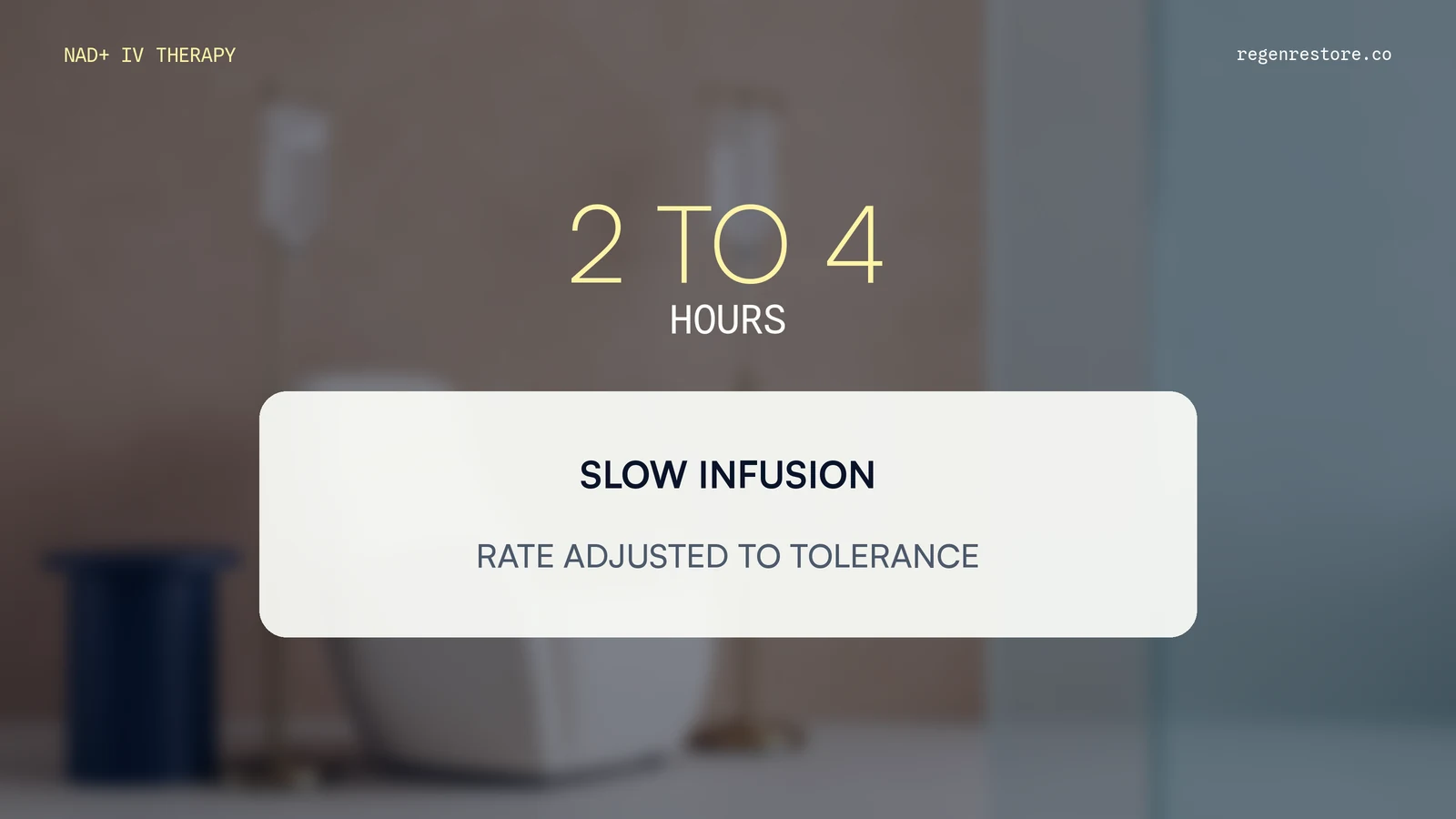
NAD+ IV therapy delivers nicotinamide adenine dinucleotide directly into the bloodstream, bypassing digestion. NAD+ is a coenzyme every cell uses to convert nutrients into energy, and levels decline with age. Infusions run 2 to 4 hours, and the slow drip rate is not optional.
What Does NAD+ Actually Do in the Body?
NAD+ is required for the reactions that turn food into cellular energy, and it also serves as a substrate for enzymes involved in DNA repair and cellular maintenance.
Three roles are established in the research literature.
- Energy metabolism, as an electron carrier in mitochondrial function.
- DNA repair, through enzymes that consume NAD+ during the repair process.
- Cellular signaling, including sirtuin activity tied to stress response.
Levels decline with age, and that decline is the basis for supplementation interest.
Why Is It Given Intravenously?
Oral NAD+ is broken down before absorption, so most oral products supply precursors such as NR or NMN rather than NAD+ itself. Intravenous delivery bypasses digestion entirely and raises circulating levels directly.
The tradeoff is time and comfort. Infusion is slower and less convenient than a capsule, which is why precursor supplements remain popular for maintenance between sessions.
What Happens During an Infusion?
A session follows 4 steps and takes 2 to 4 hours.
- Intake review, including medication list and prior infusion history.
- IV placement, typically in the forearm.
- Slow infusion, with the drip rate adjusted based on tolerance.
- Monitoring throughout, since sensations guide the rate.
Why Does the Drip Rate Matter So Much?
Infusing too quickly produces chest tightness, abdominal cramping, and a flushed sensation. These effects are uncomfortable rather than dangerous, and they resolve within minutes when the rate is slowed. Telling the nurse immediately is the correct response, not pushing through it.
What Do Patients Report?
Patients most commonly describe 5 changes, usually across several sessions rather than after one.
- Improved daytime energy and reduced afternoon crash.
- Better mental clarity and focus.
- Improved sleep quality.
- Faster recovery from training or travel.
- Reduced cravings during substance recovery protocols.
Patients pursuing infusions specifically for exhaustion can review low energy and fatigue to see how NAD+ fits alongside lab work and other options.
How Should Patients Prepare?
Preparation improves both comfort and vein access. Five steps are standard.
- Drink 32 to 64 ounces of water in the 24 hours beforehand.
- Eat a full meal within 2 hours of the appointment.
- Bring work, reading, or entertainment, since the infusion runs hours.
- Avoid alcohol for 24 hours before the session.
- Clear the schedule afterward for the first infusion until you know how you respond.
Patients who arrive dehydrated experience more difficult IV placement and often tolerate a slower rate only, which extends an already long appointment.
What Does the Evidence Show?
Research on NAD+ metabolism is substantial and growing. Research on intravenous NAD+ specifically is far more limited, consisting largely of small studies, early trials, and clinical observation.
Reported outcomes are mostly subjective, and placebo response is a real consideration in any energy or clarity claim. Clinics presenting NAD+ as proven anti-aging treatment are ahead of the evidence.
How Does It Fit Alongside Other Therapies?
NAD+ is frequently combined with other cellular and metabolic support rather than used alone. Patients pursuing detoxification protocols can review the detox pathway, and those interested in additional cellular oxygenation support often pair it with hydrogen inhalation.
Frequently Asked Questions
How many NAD+ sessions do you need?
Initial protocols commonly run 4 to 6 infusions across 1 to 2 weeks, followed by monthly maintenance. Frequency is set at consultation based on goals and response rather than sold as a fixed course.
How long do the effects last?
Patients typically report effects lasting 1 to 3 weeks after a loading series. Duration varies considerably, and maintenance intervals are adjusted based on what the individual reports.
Are there side effects?
The most common effects occur during the infusion itself: chest tightness, cramping, nausea, and flushing when the rate is too fast. All resolve when the drip slows. Bruising at the IV site is also common.
Is NAD+ IV therapy safe with medications?
Disclose your full medication list at intake. NAD+ is generally well tolerated, and the review exists to catch interactions and conditions that change the protocol.