Microneedling with PRP combines controlled micro-injury from a needling device with an application of the patient’s own platelet-rich plasma. The micro-channels create a repair response, and the plasma delivers concentrated growth factors into them. Most protocols run 3 sessions spaced 4 to 6 weeks apart.
How Does the Combination Work?
Microneedling creates thousands of controlled micro-channels that trigger collagen production, while PRP supplies the growth factors that drive the repair. The two work together for 3 reasons.
- Timing: channels remain open for several hours, allowing plasma absorption.
- Concentration: PRP delivers platelets at several times whole-blood levels.
- Depth: needle depth is adjusted by facial zone to target the correct tissue layer.
What Are the 5 Steps of a Treatment?
Every session follows the same sequence.
- Blood draw of 15 to 30 milliliters from the arm.
- Centrifuge separation to isolate the platelet-rich layer.
- Topical numbing applied for 20 to 30 minutes.
- Microneedling pass across the treatment area at zone-specific depths.
- PRP applied topically and, in some protocols, injected into targeted areas.
Total appointment time runs 60 to 90 minutes including numbing.
What Concerns Does It Address?
Treatment targets texture and tone rather than volume loss. Patients pursue it most often for 5 concerns.
- Acne scarring and post-inflammatory texture changes.
- Fine lines around the eyes and mouth.
- Enlarged pores and uneven surface texture.
- Sun damage and irregular pigmentation.
- Early skin laxity.
Deeper indented scarring often needs a combination approach. Our acne scars page outlines which scar types respond to needling and which need alternative treatment. Patients focused on fine lines can review wrinkles.
What Is the Recovery Timeline?
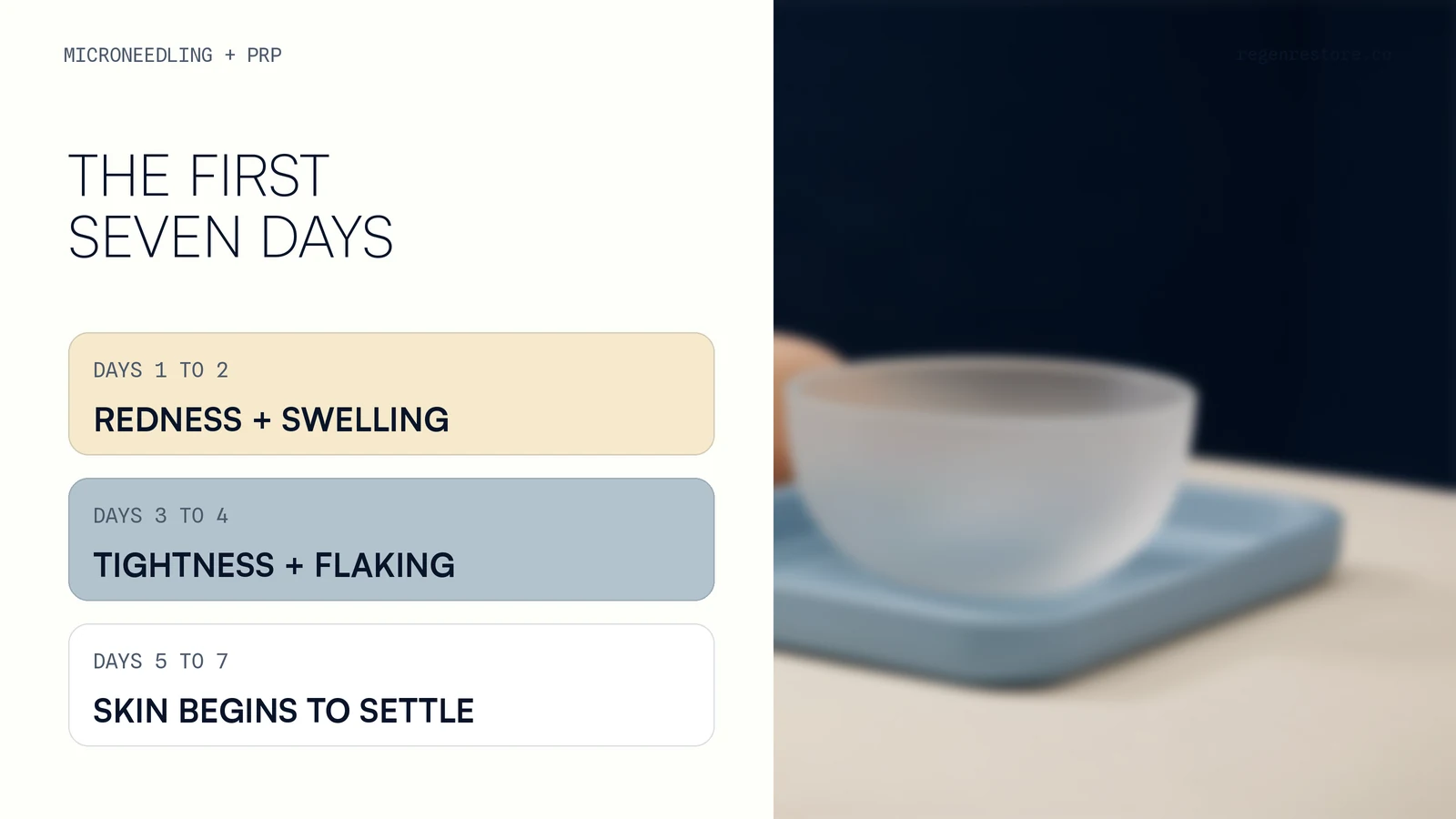
Recovery follows a predictable 7-day pattern.
- Days 1 to 2: redness resembling a moderate sunburn, with mild swelling.
- Days 3 to 4: tightness and the beginning of light flaking.
- Days 5 to 7: flaking resolves and tone begins to even out.
What Should You Avoid After Treatment?
Avoid retinoids, exfoliating acids, direct sun, and strenuous exercise for 72 hours. Sunscreen is required daily once the skin has closed, since new collagen is vulnerable to UV damage.
When Do Results Appear?
Initial brightness appears within 1 week, but collagen remodeling continues for 3 to 6 months after the final session. Results build across the series rather than peaking after a single treatment.
How Long Do Results Last?
Most patients maintain results for 12 to 18 months with a single maintenance session per year. Duration depends on age, sun exposure, and skin care consistency. PRP durability across treatment types is covered in how long does PRP last.
How Does It Compare to Microneedling Alone?
Microneedling alone still stimulates collagen, and it remains a reasonable option at a lower price point. Adding PRP changes 3 things.
- Healing speed, with redness typically resolving 1 to 2 days sooner.
- Depth of response, since growth factors reach the newly opened channels.
- Session count, as PRP protocols often reach the same result in fewer treatments.
Patients with mild texture concerns often start with needling alone. Patients treating scarring or laxity generally see more from the combination.
Who Should Not Have This Treatment?
Screening excludes patients with active acne infections, open wounds, keloid scarring history, active cold sores in the treatment area, certain blood disorders, and current isotretinoin use. Pregnancy is also a standard exclusion.
Consultations and treatment scheduling run through our microneedling treatment program, which includes a skin assessment and a session plan.
Frequently Asked Questions
Does microneedling with PRP hurt?
Topical numbing makes the procedure tolerable for most patients, who describe it as a sandpaper or vibration sensation. Sensitive areas such as the forehead and upper lip register more than the cheeks.
How many sessions are needed?
Most protocols use 3 sessions spaced 4 to 6 weeks apart. Significant acne scarring often requires 4 to 6 sessions, and the plan is set after assessment rather than booked in advance.
Can PRP be used on the neck and hands?
Yes. The neck, chest, and back of the hands are treated with the same protocol at reduced needle depth, since the skin in those areas is thinner than facial skin.