Peptide therapy uses short chains of amino acids to signal specific biological pathways, most often those governing metabolism, recovery, and tissue repair. Peptides are prescribed and monitored by a clinician. Regulatory status varies widely by compound, and that distinction matters more than any marketing claim.
What Are Peptides and How Do They Signal?
Peptides are amino acid chains shorter than proteins, typically 2 to 50 amino acids long. They function as messengers that bind to specific receptors and instruct cells to act. The body produces hundreds naturally, including insulin and growth hormone releasing hormone.
Therapeutic peptides work by 3 mechanisms.
- Receptor binding that triggers a defined downstream response.
- Stimulation of the body’s own hormone release rather than direct replacement.
- Localized signaling at sites of injury or inflammation.
What Are the 4 Main Categories of Therapeutic Peptides?
Clinical peptides group into 4 functional categories.
- Metabolic peptides, including the GLP-1 class used in weight management.
- Growth hormone secretagogues, which prompt the pituitary to release growth hormone.
- Repair and recovery peptides used for soft tissue and connective tissue healing.
- Immune and cognitive peptides targeting inflammatory and neurological pathways.
Metabolic peptides carry the strongest evidence base, since several are FDA-approved medications with large randomized trials behind them.
How Are Peptide Protocols Structured?
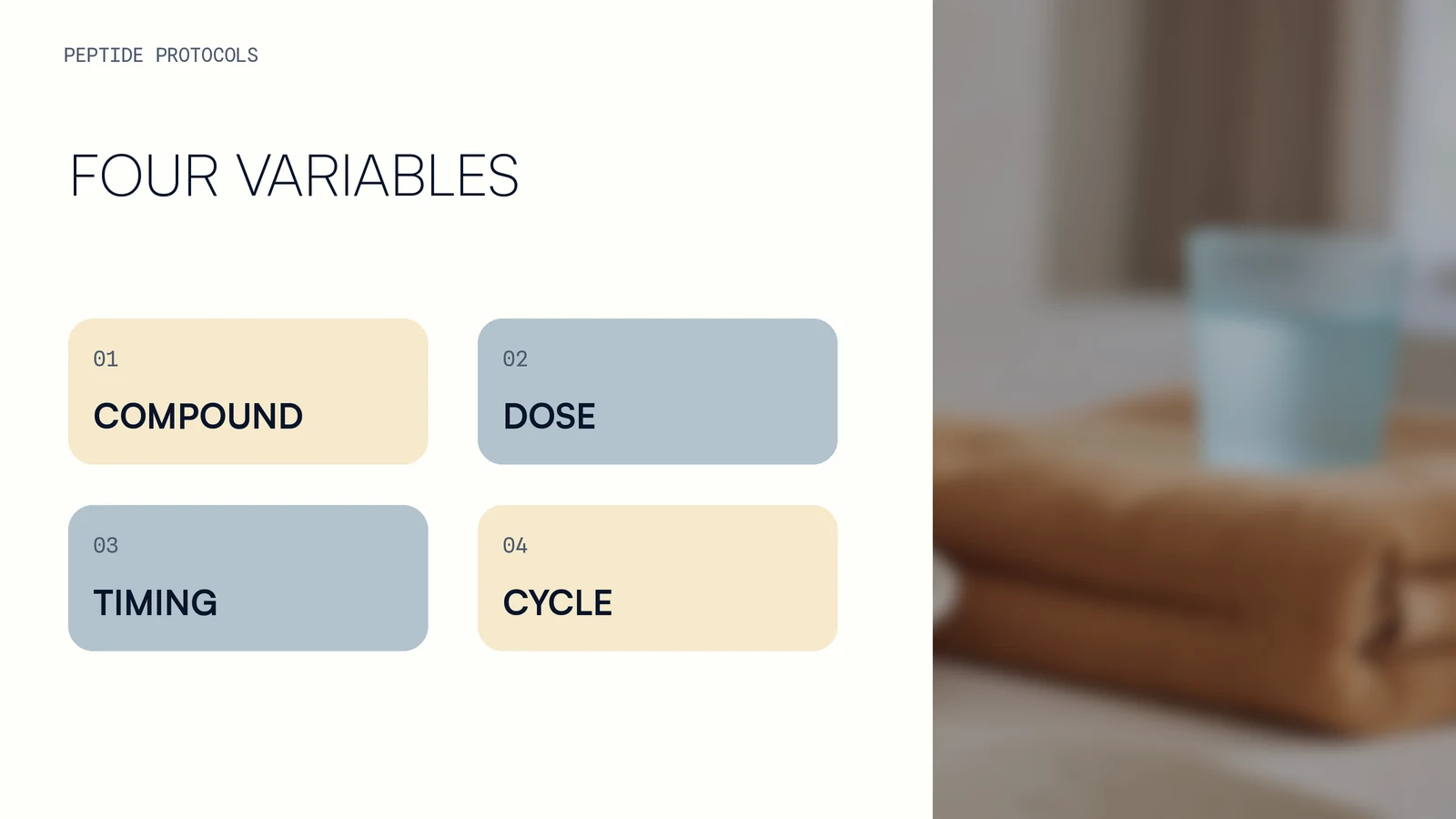
Protocols are built around 4 variables set by the prescribing clinician.
- Compound selection matched to the stated goal.
- Dose, titrated upward from a conservative starting point.
- Timing, since some peptides are dosed at night to match natural release cycles.
- Cycle length, commonly 8 to 12 weeks followed by reassessment.
Why Does Cycling Matter?
Cycling limits receptor desensitization and allows lab work to guide the next phase. Continuous use without reassessment is the most common protocol error, and it reduces both safety margin and results.
What Is the Regulatory Status of Peptides?
Some peptides are FDA-approved drugs, some are available through compounding pharmacies, and some are sold illegally as research chemicals. The third category carries real risk, since purity, dosing, and sterility are unverified.
Legitimate treatment requires 3 conditions.
- A prescription written after evaluation and lab work.
- Sourcing from a licensed compounding pharmacy or manufacturer.
- Clinical monitoring throughout the cycle.
What Monitoring Is Required?
Baseline labs precede the first dose and typically include a metabolic panel, lipid panel, fasting glucose or A1c, and hormone markers relevant to the compound. Repeat labs at 8 to 12 weeks confirm that the protocol is working and that nothing has drifted.
What Side Effects Should Patients Expect?
Side effects vary by category and are usually dose-dependent. Five are reported most often.
- Injection site redness, itching, or a small welt.
- Water retention and joint stiffness with growth hormone secretagogues.
- Nausea and reduced appetite with metabolic peptides during titration.
- Increased hunger at night with certain secretagogues.
- Fatigue during the first 2 weeks of a new protocol.
Most resolve as the dose stabilizes. Symptoms that persist past 3 weeks warrant a protocol adjustment rather than tolerance building.
Where Peptides Fit Alongside Other Treatments
Peptides are frequently combined with other regenerative and metabolic care rather than used alone. Patients pursuing weight management typically start with our medical weight loss program, which includes prescription options, lab work, and nutrition support.
Athletes and active patients focused on recovery can review athletic recovery. Patients interested in cellular energy support often pair peptides with NAD+ IV therapy.
Frequently Asked Questions
Are peptides the same as steroids?
No. Anabolic steroids are synthetic hormones that replace or exceed natural testosterone. Peptides are signaling molecules, and growth hormone secretagogues prompt the body’s own release rather than supplying an external hormone.
How long before peptides produce results?
Metabolic peptides show measurable change within 4 to 8 weeks. Recovery and repair peptides are typically assessed at 8 to 12 weeks, since connective tissue remodeling is slower than metabolic response.
Can peptides be taken orally?
Most therapeutic peptides are degraded by stomach acid and are given by subcutaneous injection. A small number of oral formulations exist, and absorption is significantly lower than injectable delivery.
Are peptides safe long term?
Long-term safety data is limited for compounds outside the FDA-approved list. Cycling, baseline and follow-up labs, and clinician supervision are the practical safeguards while that evidence develops.