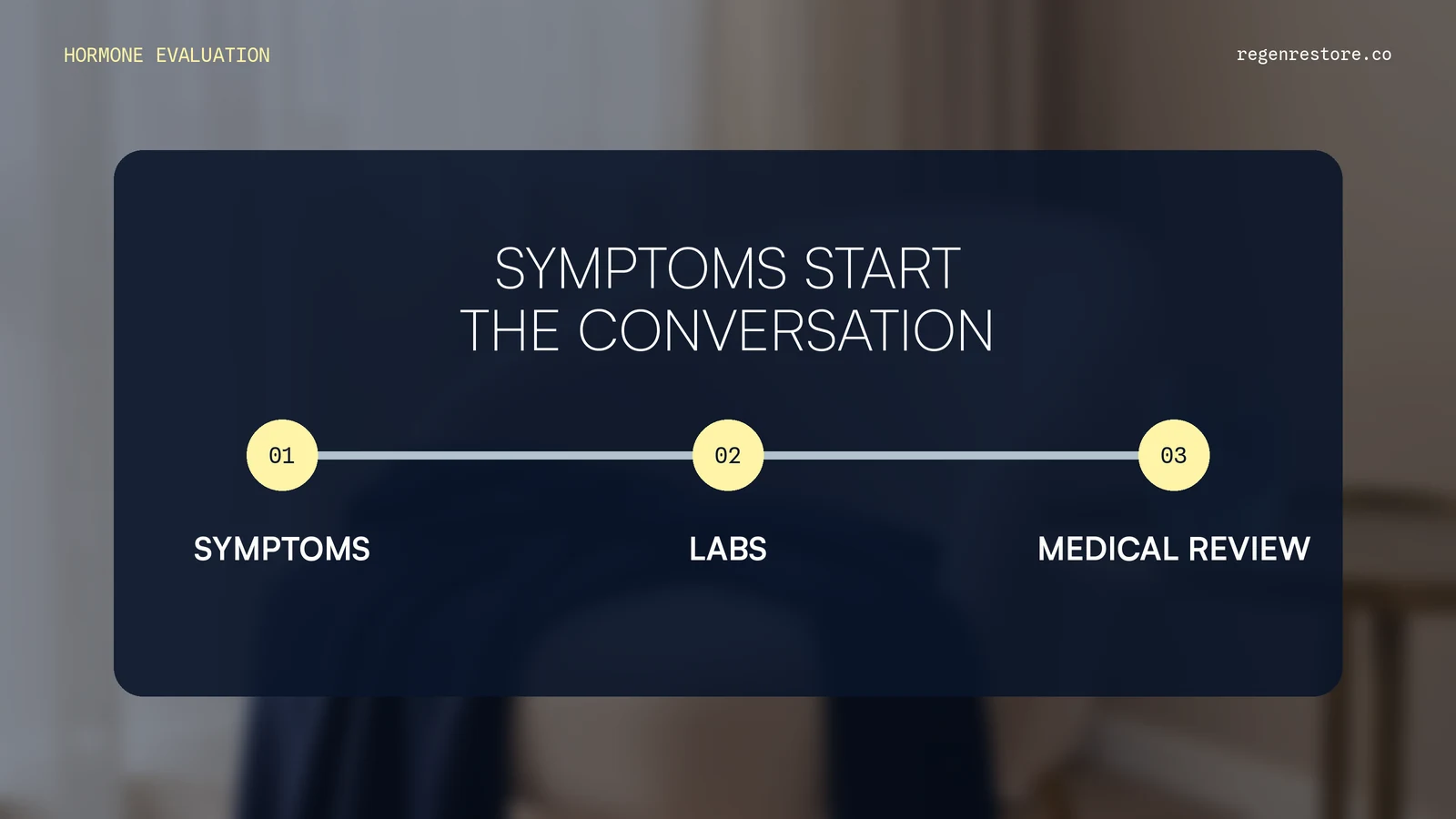
Persistent fatigue, disrupted sleep, unexplained weight changes, mood shifts, and low libido are the 5 symptoms that most often lead patients to hormone testing. Symptoms alone do not confirm a hormone imbalance. Lab work does, which is why evaluation always precedes treatment.
What Are the Most Common Symptoms of Hormone Imbalance?
Hormone imbalance produces symptoms across 4 body systems rather than one.
- Energy and metabolism: daytime fatigue, stubborn weight gain, reduced exercise tolerance.
- Sleep: difficulty falling asleep, night waking, night sweats.
- Mood and cognition: irritability, low motivation, brain fog, reduced focus.
- Sexual health: low libido, vaginal dryness, erectile difficulty.
Symptoms overlap heavily with thyroid conditions, sleep apnea, iron deficiency, and depression. That overlap is the reason a full workup matters more than a symptom checklist.
What Are the Signs of Low Testosterone in Men?
Low testosterone typically presents as reduced morning erections, declining muscle mass, increased abdominal fat, and flattened motivation. Men often describe the change as losing a step rather than feeling ill.
At What Age Do Testosterone Levels Decline?
Testosterone declines gradually beginning around age 30, at roughly 1% per year. A steeper drop, or symptoms appearing before 40, warrants testing rather than waiting. Our low testosterone page outlines the evaluation pathway.
What Are the Signs of Hormone Decline in Women?
Hormone decline in women commonly begins in perimenopause, several years before periods stop. Six changes appear most often.
- Cycles that shorten, lengthen, or become unpredictable.
- Hot flashes and night sweats.
- New or worsening sleep disruption.
- Mood volatility that does not match circumstances.
- Vaginal dryness and discomfort with intimacy.
- Thinning hair and drier skin.
Perimenopause symptoms can start in the late 30s. See menopause for the full symptom progression and treatment options.
Which Lab Tests Confirm a Hormone Imbalance?
A complete hormone panel measures more than a single hormone. Most evaluations include 6 categories.
- Total and free testosterone.
- Estradiol and progesterone.
- Thyroid panel including TSH, free T3, and free T4.
- DHEA-S and cortisol.
- Sex hormone binding globulin.
- Complete metabolic panel and vitamin D.
Timing matters for women who still cycle, since estradiol and progesterone shift across the month. Results are interpreted against symptoms, not against reference ranges alone.
Who Is Not a Candidate for Hormone Replacement Therapy?
Hormone replacement therapy is not appropriate for everyone. Contraindications include a personal history of hormone-sensitive cancer, active blood clots, unexplained vaginal bleeding, and certain liver and cardiovascular conditions. Screening for these is part of the intake, and candidacy is a medical decision made after review of history and labs.
Which Symptoms Are Usually Something Else?
Four symptom patterns are misattributed to hormones more often than not. Daytime fatigue with loud snoring points toward sleep apnea. Fatigue with heavy menstrual bleeding points toward iron deficiency. Cold intolerance with constipation and hair thinning points toward thyroid disease. Low mood without physical symptoms points toward a primary mood disorder.
Ruling these out first prevents months of hormone adjustments that were never going to resolve the complaint.
What Happens After Testing?
Treatment follows a confirmed diagnosis, and delivery method is matched to the patient. Options include pellets, injections, creams, and oral formulations, each with different dosing intervals and monitoring schedules. Our bioidentical hormone replacement therapy program covers evaluation, dosing, and follow-up labs.
Broader symptom patterns that do not fit a single hormone are addressed under hormonal imbalance, which includes thyroid and adrenal contributors.
Frequently Asked Questions
How long does it take to feel better on hormone therapy?
Most patients notice energy and sleep improvements within 3 to 6 weeks. Body composition and libido changes typically take 3 to 6 months, since those depend on sustained levels rather than an initial correction.
Can lifestyle changes fix a hormone imbalance without therapy?
Sleep, resistance training, protein intake, and alcohol reduction meaningfully improve hormone function and are recommended for every patient. Lifestyle alone does not correct a clinically low level, and it is best used alongside treatment rather than instead of it.
Do you need symptoms and abnormal labs to start treatment?
Yes. Reputable programs treat symptomatic patients with confirmatory lab findings. Treating a number without symptoms, or symptoms without a number, leads to poor outcomes and unnecessary monitoring.
Is hormone replacement therapy a lifelong commitment?
Not necessarily. Duration depends on the underlying cause, the patient’s age, and treatment goals, and it is reassessed at each follow-up rather than set at the start.